American University of Beirut · Department of Chemistry
Mazen Al-Ghoul
Professor of Chemistry working at the intersection of reaction-diffusion systems, materials synthesis, nonequilibrium thermodynamics, and computational physical chemistry.
My research follows how chemical systems organize themselves: bands, waves, fronts, spirals, fractal crystals, and structured materials emerging from transport, precipitation, and nonlinear dynamics.
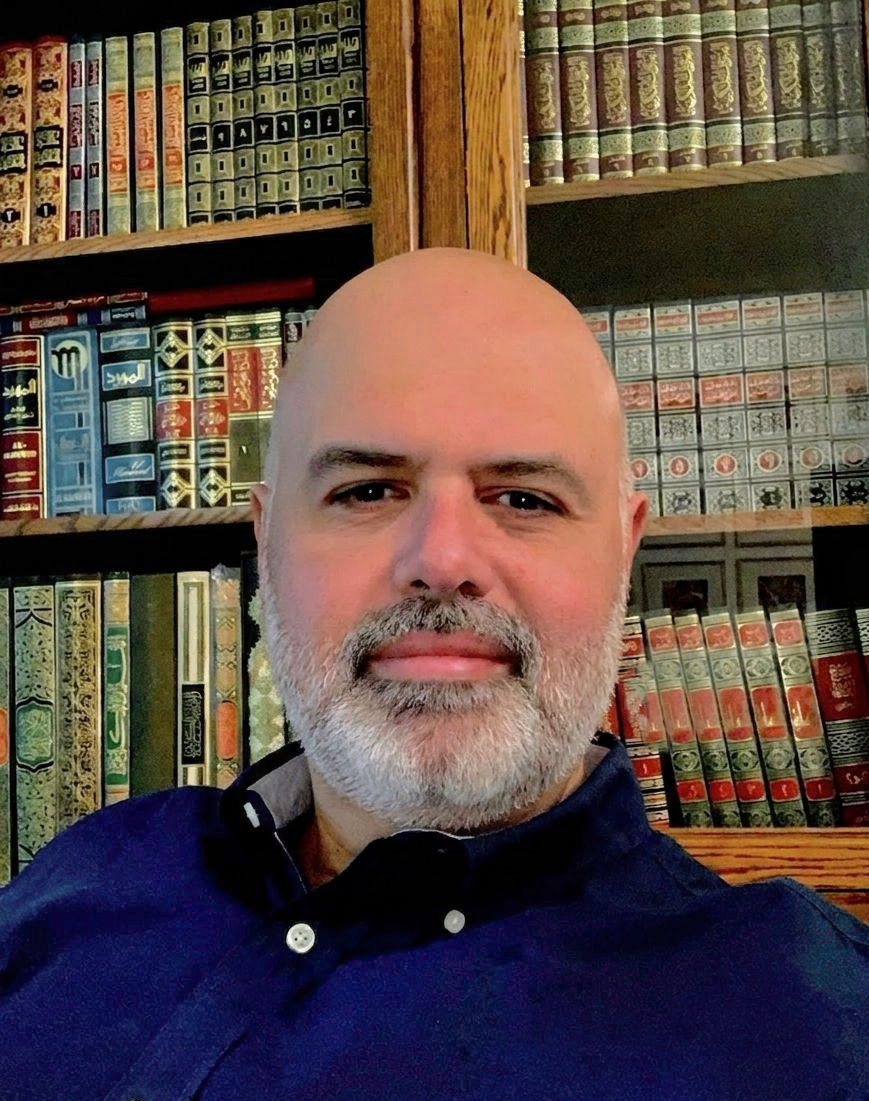
Mazen Al-Ghoul
Department of Chemistry
Beirut, Lebanon
أحدث المقالات
هل تستطيع الآلة أن تعيد اكتشاف أينشتاين؟
يناقش المقال قدرة الذكاء الاصطناعي على تحقيق اكتشافات تغيّر فهمنا للطبيعة، من خلال اختبار إعادة اكتشاف النسبية وتجارب النماذج اللغوية التاريخية ونظام AI-Newton. ويميّز بين دقة التنبؤ وبناء التفسير، وبين استرجاع المعرفة والابتكار المفاهيمي، مع بحث شروط اختبار الاكتشاف العلمي المستقل وحدوده.
النيوترينو: الشبح الذي يعبر أجسادنا ويكشف أسرار الشمس والكون
يروي المقال قصة النيوترينو، من فرضية باولي لإنقاذ قانون حفظ الطاقة إلى كشف هذه الجسيمات شديدة المراوغة. ويشرح مصادرها وضعف تفاعلها مع المادة، وكيف تتيح دراسة الشمس والظواهر الكونية وفتح نافذة على أسرار لا يستطيع الضوء وحده كشفها.
في الردّ على علي شلَق.. المقاومة ليست «تقنيّة سلطة»
يردّ المقال على اختزال المقاومة في «تقنيّة سلطة»، عبر التمييز بين أسباب نشأتها وتوظيفها السياسي لاحقاً. ويستعيد جذورها الوطنية في لبنان وعلاقتها بعجز الدولة عن حماية الأرض، مع الفصل بين مشروعية مقاومة الاحتلال ونقد الممارسة السياسية، وطرح سؤال بناء دولة قادرة على أداء وظيفتها السيادية.
Biography
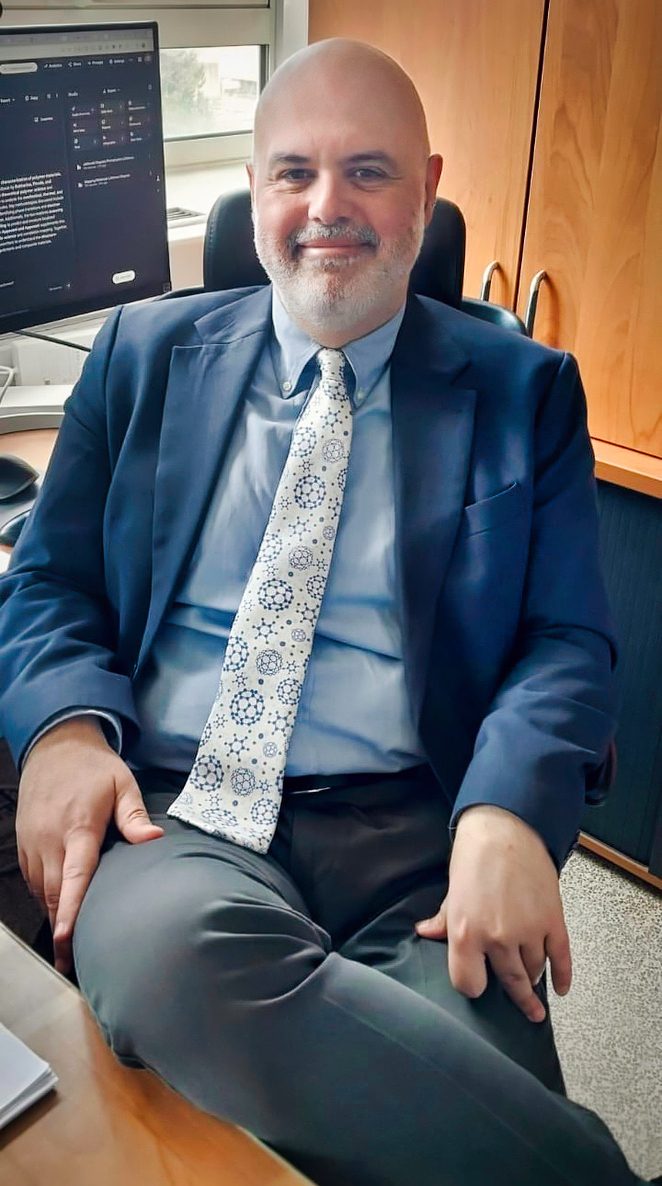
Dr. Mazen Al-Ghoul is a tenured Professor of Chemistry at the American University of Beirut, specializing in physical chemistry, reaction-diffusion systems, irreversible thermodynamics, and computational modeling of complex chemical media.
His work connects theory, simulation, and experiment to understand how transport, precipitation, wave propagation, and nonlinear kinetics generate organized chemical patterns. His research program includes refereed papers, two books with World Scientific, an edited proceedings volume, and a book chapter on precipitation patterns in reaction-diffusion systems.
Education
-
Postdoctoral Research Stanford University, Department of Chemistry (1997-1998).
-
Ph.D. in Physical Chemistry McGill University, Montreal, Canada (1993-1997). Dissertation: "Studies in Generalized Hydrodynamics for Chemical Reactions and Shock Waves." Supervisor: Professor Byung Chan Eu.
-
B.Sc. in Chemistry American University of Beirut, Beirut, Lebanon (1989-1992).
Professional Appointments
- Professor (Tenured), Department of Chemistry, American University of Beirut (2010-Present).
- Associate Professor, Department of Chemistry, American University of Beirut (2004-2010).
- Assistant Professor, Department of Chemistry, American University of Beirut (1998-2004).
- Fellow, Center for Advanced Mathematical Sciences, AUB (2008-2011); Associate Member (1998-2004).
Recent Visiting Appointments
- Visiting Professor, INRS Centre Energie, Materiaux et Telecommunications, Universite du Quebec (May-August 2023).
- Visiting Professor, Department of Chemistry and Biochemistry, Concordia University (July 2022-May 2023).
- Visiting Professor, Department of Chemistry, McGill University (July 2019-August 2020).
Leadership
Chair, Department of Chemistry (2005-2013); Director, Graduate Program in Computational Science (2011-2017); Chair, High-Performance Computing Committee (2011-2017).
Awards
FRQ Award (2023), Arab Fund Distinguished Scholar Award (2019), Hungarian State Fellowship (2015-2016), and ICI Award for Excellence in Physical Chemistry Research (1997).
Scholarship
Author/co-author of two thermodynamics books, one book chapter, an edited proceedings volume, and refereed research papers.
Mentorship
Advisor and co-advisor to graduate and undergraduate researchers across chemistry, computational science, and chemical engineering.
Research Interests & Publications
Research Program
The group develops reaction-diffusion frameworks for pattern formation, crystal growth, materials synthesis, and nonequilibrium chemical dynamics. The work combines laboratory experiments, mathematical modeling, and numerical simulation to control morphology, size, phase transitions, and transport-driven self-organization in chemical and materials systems.
Reaction-Diffusion and Liesegang Systems
Wave propagation, precipitation fronts, scaling laws, phase transitions, chemical bands, spots, ripples, spirals, and geochemical self-organization.
Numerical Modeling and Nonequilibrium Theory
Generalized hydrodynamics, irreversible thermodynamics, finite-volume and finite-element simulations, hyperbolic reaction-diffusion equations, and nonlinear evolution models.
Materials and Crystal Engineering
MOF-199, ZIF-8/ZIF-67, multivariate MOFs, lanthanide hydroxides, layered double hydroxides, iron oxides, and reaction-diffusion-mediated fractal morphogenesis.
Environmental and Functional Applications
Adsorption, photocatalytic dye degradation, arsenic removal, water treatment materials, and DFT-supported interpretation of functional nanostructures.
Recent Publications from the CV
Transformation Cascades in Iron Oxides: Quantitative Resolution of Sequential Precipitation Using the Reaction-Diffusion Framework.
N. Abi Aad and M. Al-Ghoul*, ACS Omega, 11(6), 10320-10334 (2026).
Fractal MOF architectures: reaction-diffusion-mediated transmutation of crystalline scaffolds.
S. Moon and M. Al-Ghoul*, CrystEngComm, 27, 7282-7286 (2025).
Tunable Fractal Morphogenesis in Reaction-Diffusion Crystallization: From Dendrites to Compact Aggregates.
S. Moon and M. Al-Ghoul*, ACS Omega, 10, 38629-38639 (2025).
Chiral resolution of copper aspartate under reaction-diffusion: synergy of experiment and simulation.
P. Y. Fong, S. Khan, H. M. Titi, M. Ammar, F. Vetrone, M. Al-Ghoul* and L. A. Cuccia*, CrystEngComm, 27, 4744-4755 (2025).
Combined Experimental and DFT Study on the Adsorption of Congo Red Dye using Self-Assembled Hierarchical Microspheres of Lanthanum Hydroxide.
A. Jonderian, M. Ammar, H. El-Rassy* and M. Al-Ghoul*, Colloids and Surfaces A, 681, 132728 (2024).
Funded Research Themes
Layered Nanomaterials
Qatar Foundation project on predictive design of layered nanomaterials with P. Coveney and M. Khader (USD 1,000,000; 2010-2013).
Nanostructure Synthesis
Lebanese National Research Council support for lanthanum hydroxide nano- and micro-structures and cadmium sulfide quantum-dot wave propagation.
MOFs and Reaction-Diffusion
AUB URB projects on multivariate MOFs, MOF-199, ZIF-8 crystals, nucleation, growth, and reaction-diffusion modeling.
Gallery
A visual collection inspired by reaction-diffusion patterns, cobalt hydroxide, silver dichromate, and material structures from the research program.
Reaction-diffusion pattern formation
Cobalt hydroxide patterns
Silver dichromate banding
Teaching
I am dedicated to mentoring students and providing rigorous education in physical chemistry, computational chemistry, nanoscience, and environmental chemistry.
Introduction to Environmental Chemistry
Atmospheric chemistry—including smog, ozone depletion, and the greenhouse effect—alongside aquatic chemistry, water pollution, acid rain, heavy metals, toxicology, and soil chemistry.
Thermodynamics and Chemical Dynamics
Physical chemistry foundations in thermodynamics, kinetics, and molecular-level chemical dynamics.
Course resourcesIntroduction to Nanoscience with Applications
Concepts and applications of nanoscience for students working across chemistry and materials.
Molecular Dynamics and Computer Simulation
Computational approaches to molecular motion, simulation design, and chemical modeling.
Chemical Kinetics
Rate laws, mechanisms, transport effects, and dynamical descriptions of chemical processes.
Books
"The book is distinctive in a number of ways [and] goes beyond what is contained in most books that address this subject. All in all, I found the book most stimulating. Graduate students requiring a deeper understanding of the subject and academics with an interest in thermodynamics [will find] the book a very welcome addition to their library."
Vice-Chancellor of Cardiff University, UK
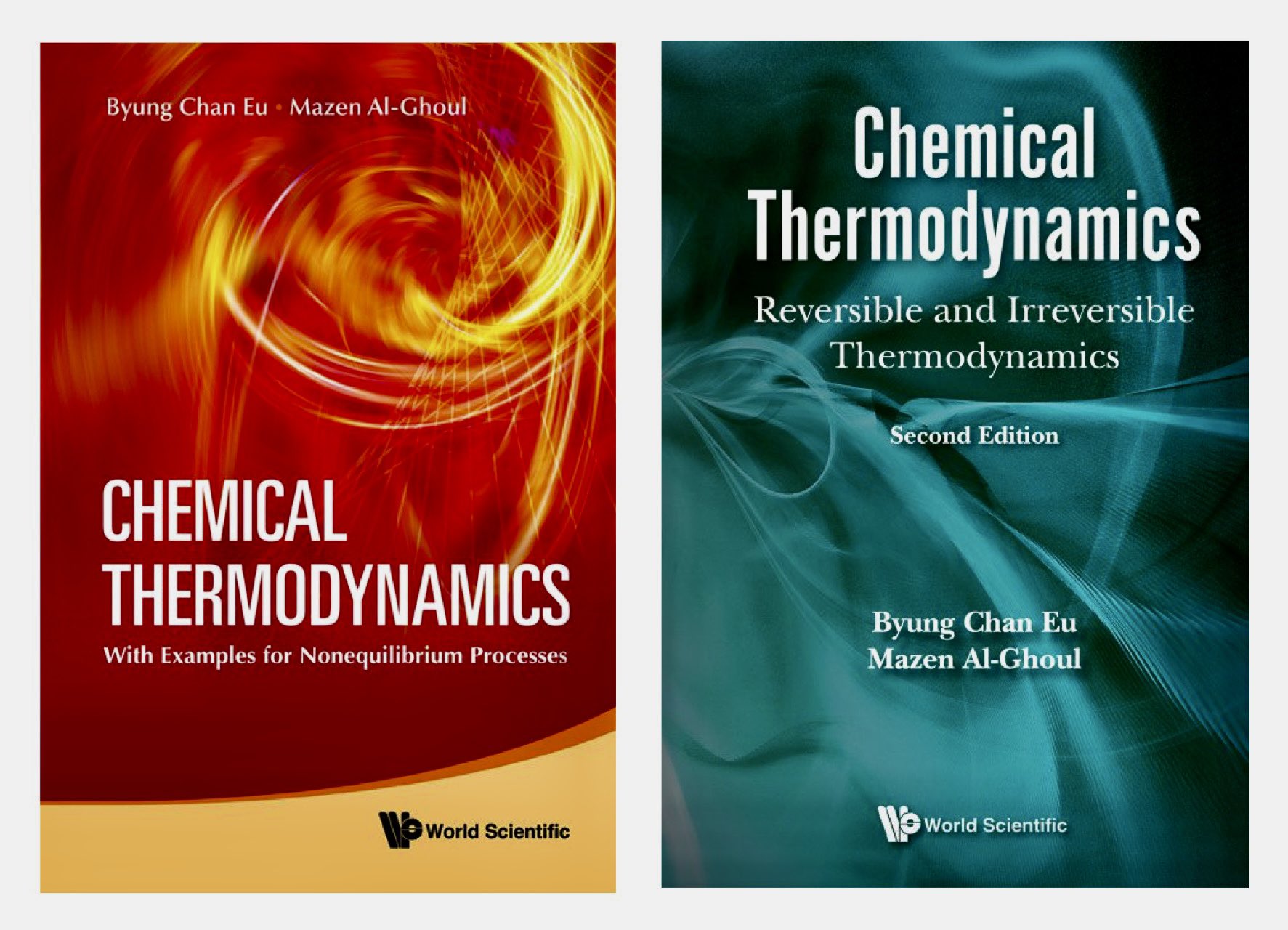
Chemical Thermodynamics: Reversible and Irreversible Thermodynamics
Byung Chan Eu and Mazen Al-Ghoul · Second Edition
The second edition of Chemical Thermodynamics gives readers a unified treatment of equilibrium thermodynamics, nonequilibrium thermodynamics, and generalized hydrodynamics in one volume. It is written for advanced undergraduate and graduate students who need the first and second laws developed beyond the traditional equilibrium-only presentation.
The book connects thermodynamic principles to linear and nonlinear hydrodynamic processes, including chemical oscillations, pattern formation, shock waves, sound propagation, and Liesegang patterns. It first develops classical equilibrium thermodynamics, then extends entropy concepts to irreversible processes using calortropy, or heat evolution, so that macroscopic process theory remains consistent with thermodynamic laws.
Coverage includes:
- Temperature, work, heat, and the first, second, and third laws.
- Equilibrium conditions, thermodynamic stability, mixtures, open systems, heterogeneous equilibria, real fluids, and real gas mixtures.
- Chemical equilibria, solutions, surfaces, electrolyte solutions, Debye-Huckel theory, galvanic cells, and fields.
- Nonequilibrium thermodynamics, generalized hydrodynamics, chemical oscillations, wave phenomena, and Liesegang pattern formation.
Publisher: World Scientific Publishing Company
Publication year: 2018
Pages: 652
DOI: 10.1142/10599
Print ISBN: 978-981-322-605-0
eBook ISBN: 978-981-322-607-4
Table of Contents
From equilibrium thermodynamics to nonlinear irreversible processes
The second edition is organized around a reversible/equilibrium foundation, followed by irreversible thermodynamics and appendices for supporting coefficients and conservation laws.
Opening
Foundations
- Introduction
Part I
Thermodynamics of Reversible Processes — Equilibrium Thermodynamics
- Temperature, Work, and Heat
- The First Law of Thermodynamics
- The Second Law of Thermodynamics
- Equilibrium Conditions and Thermodynamic Stability
- The Third Law of Thermodynamics
- Thermodynamics of Mixtures and Open Systems
- Heterogeneous Equilibria
- Thermodynamics of Real Fluids
- Canonical Equation of State
- Thermodynamics of Real Gas Mixtures
- Chemical Equilibria
- Thermodynamics of Solutions
- Thermodynamics of Surfaces
- Electrolyte Solutions
- Debye-Huckel Theory of Strong Electrolyte Solutions
- Galvanic Cells and Other Classes of Cells
- Thermodynamics of Electric and Magnetic Fields
Part II
Thermodynamics of Irreversible Processes — Irreversible Thermodynamics
- Thermodynamics of Nonequilibrium Processes
- Linear Irreversible Thermodynamics
- Nonlinear Irreversible Processes
- Oscillatory Structures in Nonlinear Systems
Appendices
Reference Material
- The Second Virial Coefficient of Lennard-Jones Fluids
- Various Coefficients Used in Chapter 10
- Local Form of Energy Conservation Law